
It won’t be soon, but the shift towards sustainable mobility will also come to the rotary wing industry. The challenge is to reduce pollutant emissions, from energy source to commissioning, and thus to achieve decarbonisation.
While the perfectly clean helicopter does not yet exist, new alternatives are emerging that promise to reduce its carbon footprint, such as electric “flying taxis”, hydrogen-powered aircraft, and new designs that save fuel and pollute less.
Many companies that are taking steps to address environmental challenges, including the transition to sustainable aviation fuels derived from renewable non-fossil fuel sources and used by aircraft certified for Jet A/A-1 fuels.
Sustainable Aviation Fuel
Sustainable Aviation Fuel (SAF) is currently the only direct replacement alternative to liquid fossil fuels for commercial aviation.
The term refers to all types of paraffin produced in a sustainable way that does not harm the food chain and is therefore also known as second-generation paraffin.
SAF reduces carbon dioxide emissions, thanks to the use of residual and waste material such as used vegetable oils and fats. They can also be made from household and business solid waste such as packaging, paper, textiles and food scraps that would otherwise go to landfill or incineration. As a result, the fuel does not have a negative impact on agricultural food production.
Biofuels are used under the same performance and safety conditions as conventional fuels and also represent a complete drop-in solution, meaning that the aircraft can be powered by SAF without requiring changes to the fuelling infrastructure or the aircraft, which represents a significant cost reduction.
In addition to biofuels, electrofuels could also help reduce emissions. These synthetic fuels use green hydrogen, produced by electrolysis using renewable energy, and combined with carbon extracted from CO2. If this CO2 is obtained using carbon capture technology, we could be close to achieving a totally emission-free fuel.
Bell Flight
All helicopters in the Bell-operated demonstration and training fleet, totalling 20 aircraft, began using sustainable aviation fuel. “As the industry moves toward a greener future, Bell’s decision to introduce SAF on our training and demonstration helicopters is a reflection of our dedication to this shared goal and to providing clean alternatives for the environment,” said Michael Thacker, executive vice president of Technology and Commercial Business.
In addition to SAF integration, Bell is exploring other ways to reduce fuel consumption by testing electric technology in new vehicles, such as the Bell Autonomous Pod Transport and the electrically distributed AntiTorque demonstrator.
Bell continues to support the aviation industry in its goal of achieving carbon neutral growth and reducing CO₂ emissions by 50 percent by 2050.
Airbus Helicopters
CityAirbus NextGen is a four-seat, all-electric vertical take-off and landing (eVTOL) multicopter concept, equipped with fixed wings. It has a range of 80 km and a cruise speed of 120 km/h, making it perfectly suited for zero-emission flight operations for a variety of applications in major cities.
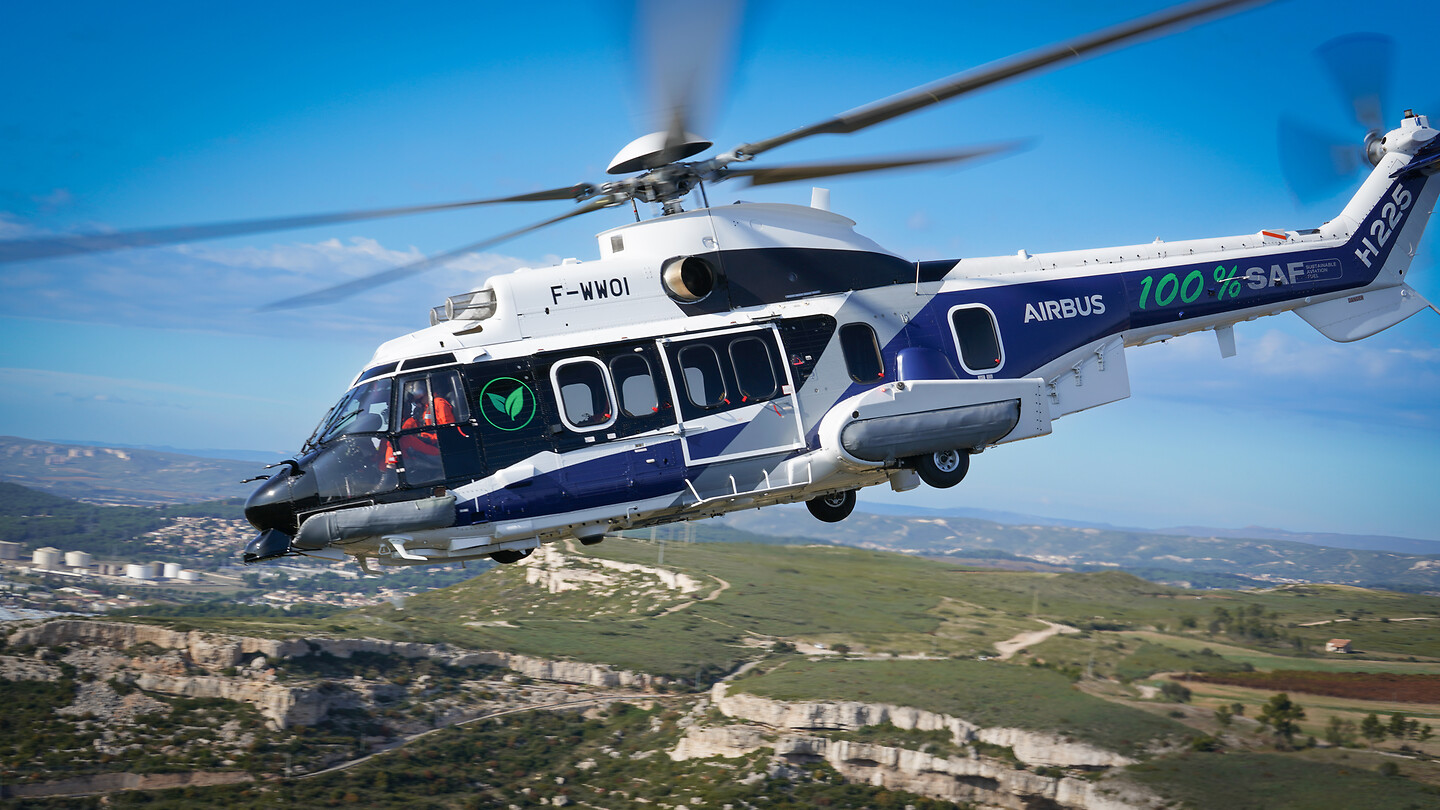
The first flight of an Airbus H225 helicopter with 100% sustainable aviation fuel (SAF) powered by one of the Safran Makila 2 engines has recently taken place.
“The SAF is an important pillar in Airbus Helicopters’ decarbonisation strategy because it provides immediate CO2 reduction with no negative impact on helicopter performance,” said Stefan Thome, Executive Vice President Engineering and Chief Technical Officer of Airbus Helicopters.
To drive the deployment of biofuels, Airbus Helicopters has launched a dedicated SAF user group for the rotary-wing aircraft community. The company has also started using SAF for training and test flights at its sites in France and Germany.
Airbus Helicopters is the creator of the Sustainable Aviation Fuel (SAF) User Group, dedicated to the rotary wing community to unite the industry and drive the deployment of biofuels.
The industry-leading company is thus calling on all stakeholders to join the initiative to reduce aviation’s impact on the environment. All helicopters manufactured by Airbus are currently certified to operate with a blend of up to 50% SAF in traditional fossil fuel.
Safran
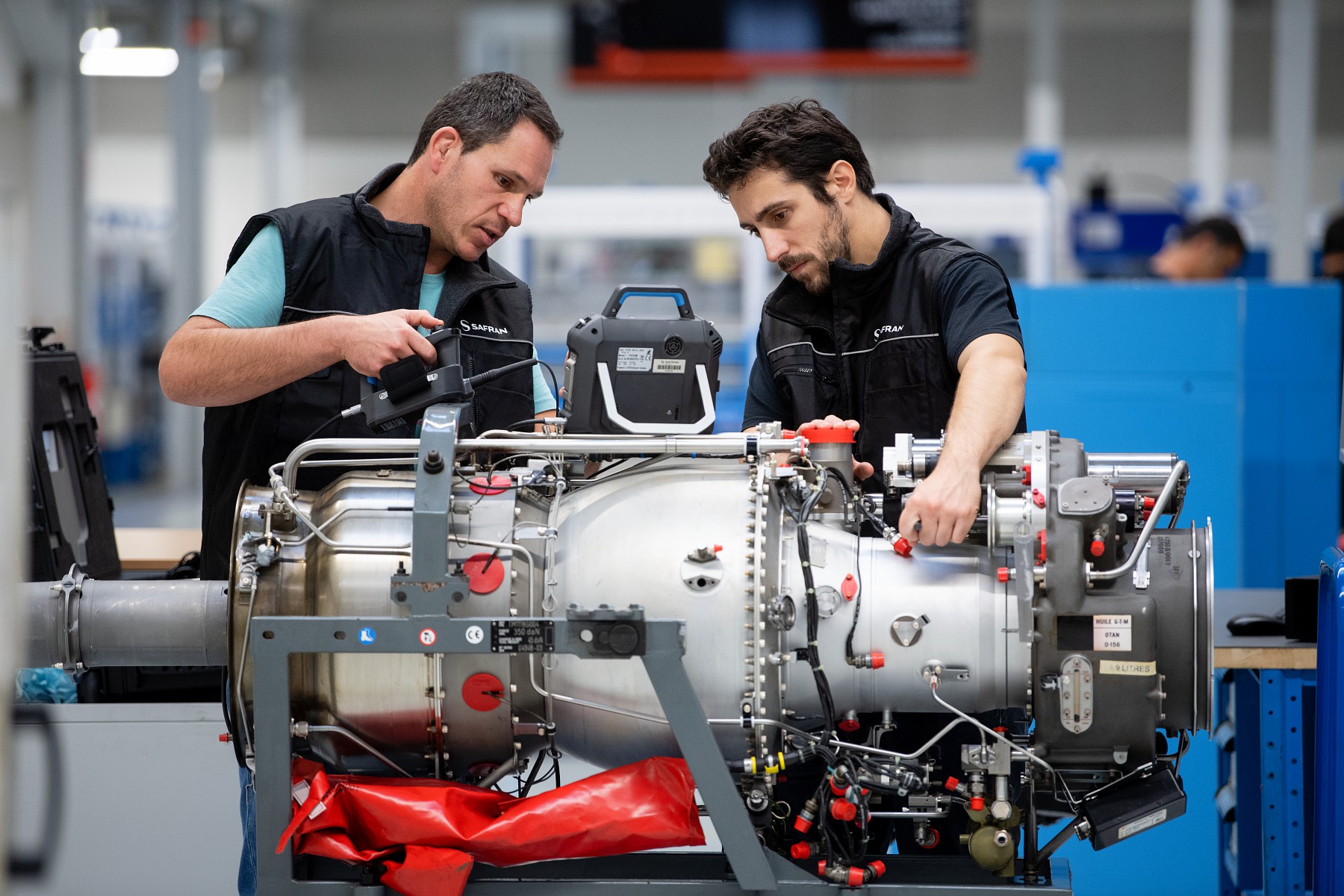
Safran is leading the engine industry’s efforts to reduce carbon dioxide emissions from helicopters and recently ran an Arrano engine using 38% sustainable aviation fuel (SAF) at its Bordes plant in southwest France. It has also made the first flight of a rescue helicopter with biofuel produced from used cooking oil, an Airbus 145 from ADAC Luftrettung, operating its twin Arriel 2E turbines on a blend of 40% biofuel and conventional Jet-A1, thus reducing emissions by up to 90%. This ground execution marks the first step in a strategy to implement SAF on engine test cells at all Safran Helicopter Engines plants. “All Safran engines are certified to run on up to 50 percent sustainable fuel, including biofuel. Our goal is to reach 100 percent.
“Reducing CO2 emissions is a collective responsibility that has been taken on by the women and men of Safran. By introducing SAF, and specifically biofuel to helicopter operators and in our plants, we are reducing CO2 emissions in both. I am proud that, once again, Safran has taken the lead in decarbonizing aviation,” Franck Saudo, CEO of Safran Helicopter Engines.
“Our industry is in the midst of the most challenging times we have ever faced. We must act now to accelerate our efforts to reduce our impact on the environment,” said Olivier Andriès, CEO of Safran.
Safran Helicopter Engines and ADAC have now agreed to continue to study the use of biofuel on a daily basis with a helicopter based in Cologne. In parallel, the manufacturer plans to conduct similar tests with other helicopter operators.
GE Aviation and Safran announced the development of a programme that will demonstrate and mature a range of new and disruptive technologies for future engines with new architectures that could enter service in the mid-2030s. The objectives of the CFM RISE (Revolutionary Innovation for Sustainable Engines) programme focus on ensuring optimised fuel consumption and thus reducing CO2 emissions by more than 20% compared to today’s most efficient engines, as well as ensuring 100% compatibility with alternative energy sources, such as sustainable aviation fuels and hydrogen.
Electric power
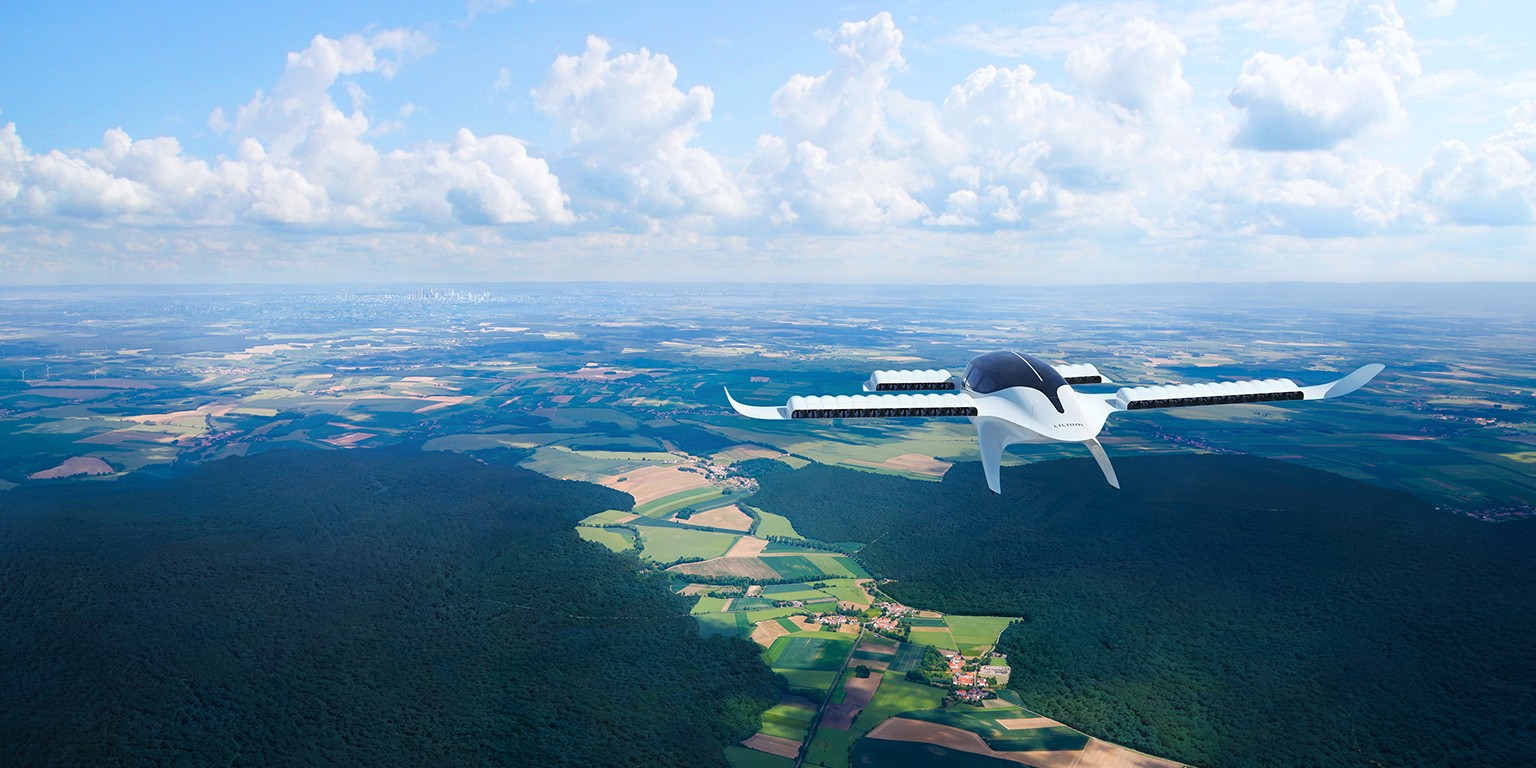
Lilium recently announced the creation of a small electric aircraft that promises to be an environmentally friendly solution to ground traffic in large cities, the Lilium Jet, which will have a vertical take-off and landing system called eVTOL. The Lilium Jet has 36 electric motors positioned throughout the airframe that give it precision control during flight, even in the most difficult phase, when it transitions from hovering to winged forward flight. It can accommodate six passengers and a pilot, with a cruising speed of 175 mph (280 km/h), flying at 10,300 ft (3,000 m) and will have a maximum range of 155 miles (250 km) including reserves. It has a wingspan of 13.9 m and a length of 8.5 m (26.5 ft).
The company’s mission is to provide electric regional aerial mobility, i.e. its service is similar to that of a taxi but flying, thus avoiding the pollution generated by cars and buses. It is also very quiet, emitting only 20% of the noise of a helicopter, which makes it a very interesting option for its service in cities, as it is efficient and discreet. It is expected to be ready by 2035.
Hydrogen revolutionising aviation
Hydrogen is proposed as an emission-free fuel that could help clean up aviation’s reputation as a major carbon emitter. PA-890 is the world’s first helicopter to run on hydrogen.
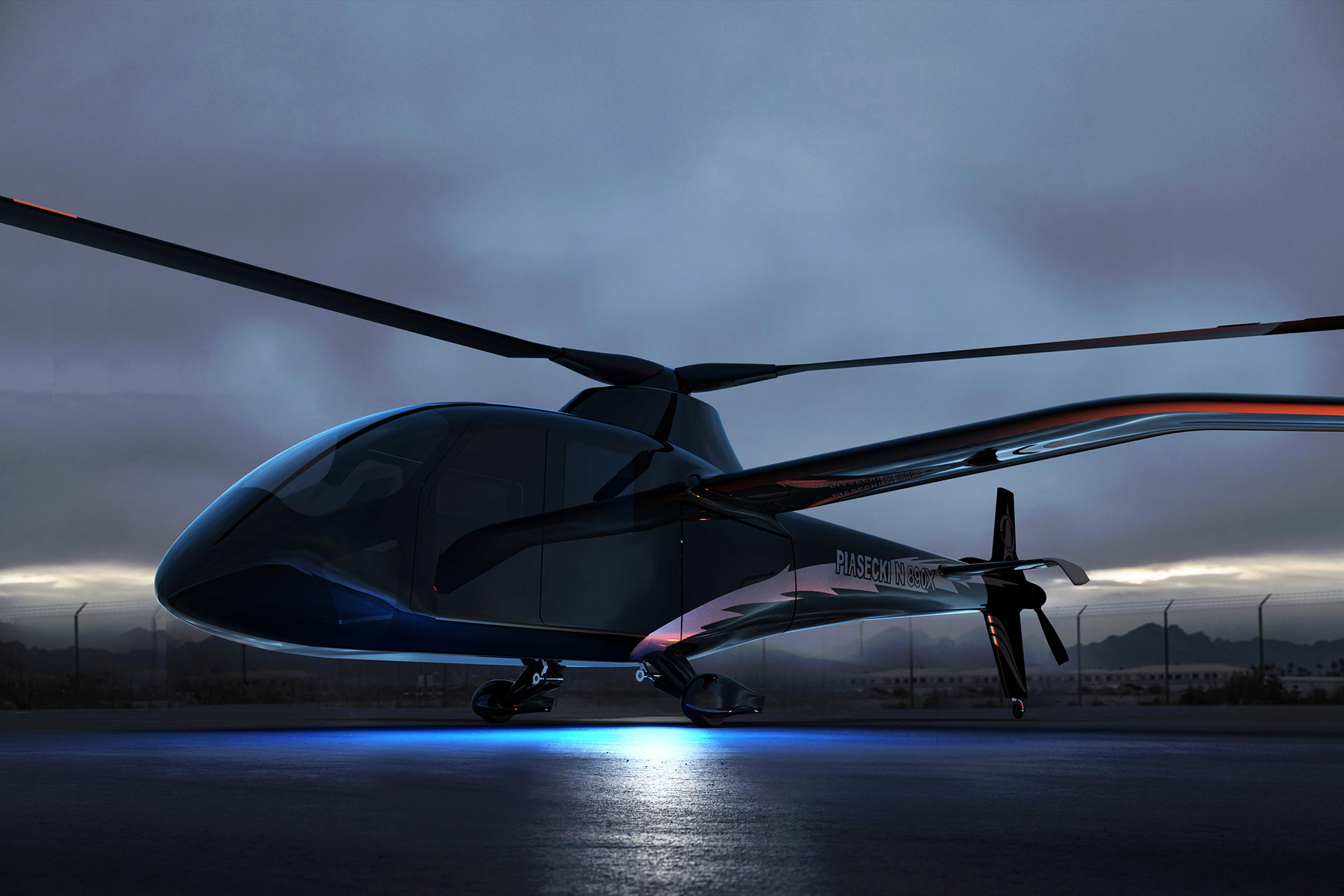
This “composite helicopter” has wings that rotate vertically during take-off and horizontally during flight, taking advantage of both propellers and fixed wings. The PA-890 is the result of a joint effort between two companies: Piasecki Aircraft, a US company specialising in the development of helicopters and autonomous aerial vehicles, and HyPoint, a start-up company dedicated to the development of hydrogen fuel cells for aviation.
The two companies hope to have a prototype in the air for certification by 2024 with commercial deliveries of what would be the first manned hydrogen-powered helicopter from 2025.
Its commercial use would reduce direct operating cost by 50%, in addition to significant noise reduction and zero direct emissions compared to turbine-powered, fossil-fuelled helicopters. The fully FAA-certified hydrogen system would instantly enable electric aircraft to carry several times more power on board, greatly increasing flight endurance while allowing rapid refuelling instead of slow refuelling.
“We are focused on the development and certification of a 650 kW system for our PA-890 eVTOL Helicopter, which would be the world’s first manned hydrogen-powered helicopter,” says John Piasecki, President and CEO of Piasecki Aircraft.
This composite aircraft will use a compact HyPoint fuel cell that, according to the company, has four times the energy density of lithium-ion batteries. Hydrogen will deliver up to 1,500 watt-hours per kilogram of energy density, whereas lithium-ion batteries typically cannot exceed 300 watt-hours per kilogram of energy density.
The hydrogen fuel system has already been validated in various tests and has sufficient capacity to perform the energy-intensive take-off and landing tasks.
Another alternative to fossil fuels is Power-to-Liquid. PTL refers to the generation of liquid fuels produced with electricity from renewable sources, which, together with the use of biofuels, will bring aviation closer to climate neutrality.
One of the main advantages of PtL is that it can be transported and distributed through the existing network of fossil fuel infrastructure, including pipelines and refuelling stations. PtL is a synthetically produced liquid hydrocarbon. Renewable electricity is the key energy source, and water and carbon dioxide (CO₂) are the main resources used in the production of PtL.
It is only a matter of time (and a lot of money) before the conversation about alternative fuels and electric propulsion takes over all facets of the helicopter industry.
