
As technology continues to advance, we can expect virtual reality (VR) applications and devices to become increasingly powerful and capable of creating even more immersive and realistic visuals.
While VR has already been used extensively in pilot training, we’re now seeing a new era of VR flying that promises to take the experience to the next level. With these breakthroughs, the potential applications for VR are expanding rapidly, and we can only imagine what exciting new uses will be discovered in the years to come.
Aviation has always been an industry of pioneers, so it is not surprising that it has been quick to adopt new technologies. Modern flight simulators make it possible for pilots to learn both basic and advanced skills and to go through different stages in their training, where they are continuously assessed so that they are always prepared to comply with the standard procedures required in any normal or emergency situation.
The aviation sector is facing new challenges and developments with maintenance and training leading the recovery, strongly driven by digitalisation, and new services to improve fleet efficiency, supporting the industry’s net zero CO2 ambitions. In particular, demand for highly skilled labour is expected to increase by more than 2 million people, including pilots, technicians and cabin crew over the next 20 years.
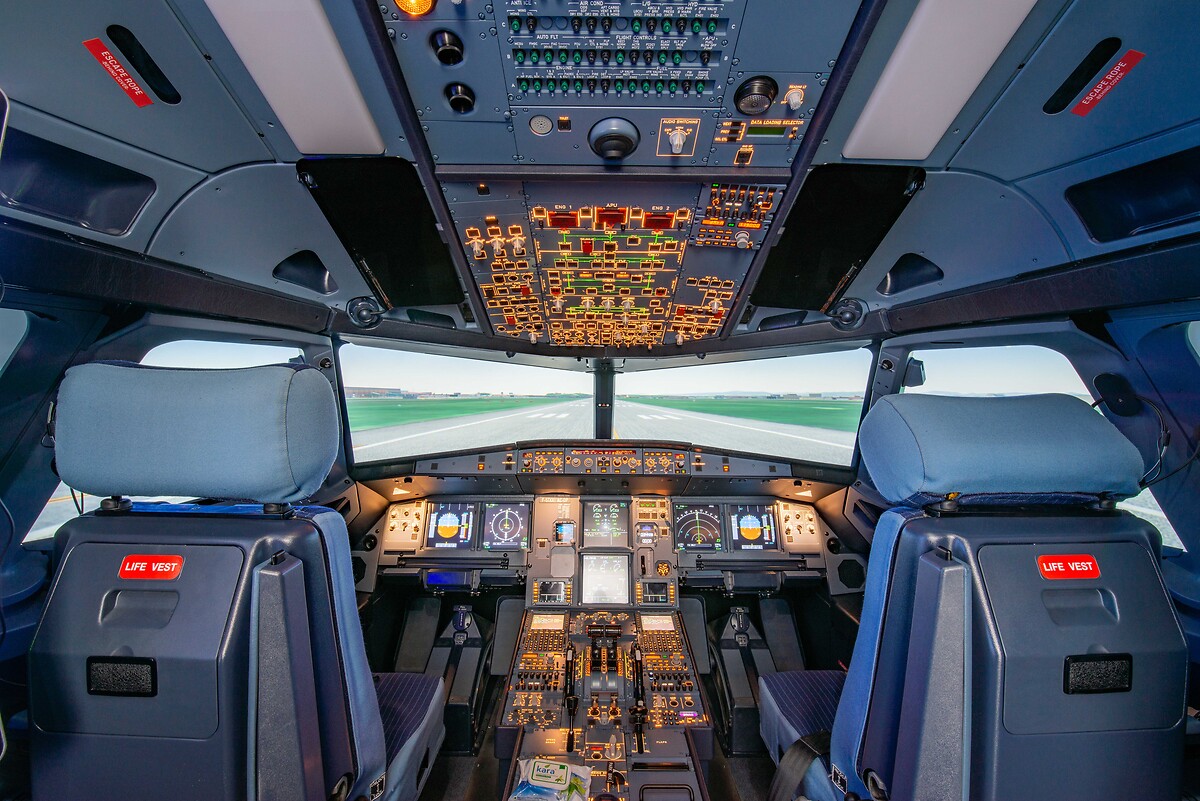
“New technologies are taking pilot training to the next level.”
In this age of technological developments and innovation, flight simulator is used for time and cost effective training, without using any real aircraft, but sophisticated computer systems.
Virtual reality creates a perfect environment for training by creating training scenarios anywhere in the virtual world’s airports. Moreover, the modern full flight simulator not only puts you inside the cockpit but also makes you feel like you’re actually flying!
But how can pilots and aviation professionals benefit from these new technologies?
What degree of realism will it be certified and validated as flight training by the authorities?
Airbus continues to position itself as a global pioneer in the aerospace industry, operating in commercial aircraft, helicopters, defence and space. It leads the development, manufacture and supply of aerospace products, services and solutions, offering the most comprehensive range of training and flight simulators, enabling customers to benefit from training expertise and state-of-the-art technologies.
The Airbus flight training network currently counts 17 locations worldwide, guided by passionate experts benefitting from a supportive environment and innovative teaching techniques for the highest quality training.
Each Airbus’s full flight simulators annually provides between 6500 and 7000 hours of practical simulator training, reaching more than 200,000 hours of flight training with its entire fleet.
During training are different phases, from knowledge acquisition through e-learning or distance learning, or in the flight simulator, where the pilot acquires the aircraft procedures. Also during the full flight simulator phases, the flight instructor or examiner can address and test the pilot’s ability to operate in different environments and conditions.
Airbus integrates the concept of MIXED TRAINING, where the pilot is exposed to the aircraft from the very beginning of the training.
A full flight simulator (FFS) is a technologically superior model that uses advanced motion, visuals, communication and air traffic technology. For instance, a FFS can simulate the friction of the air along the fuselage and expose pilots to spatial-orientation exercises. This gives more than a 180-degree view in satellite-signal quality of all important objects at a particular airport, and pilots can then precisely work out their approach procedures for the airport in the simulator.
 Photo Credits: Simón Blaise - Aero-Naves
With the guiding principles of creating robust and resilient pilots, through the right course and the right instructor where training and safety are one.
VIRTUAL REALITY ON ROTARY WINGS
Virtual reality simulators are also changing the game for helicopter safety, revolutionising training and boosting safety. The immersive experience allows pilots to train like on an actual helicopter where the full motion system replicates helicopter vibration and movements.
The pilot’s own movements are depicted in a 360° high-resolution 3D environment with realistic sound system in a Functional cockpit replica and enables pilots to receive training credits and to perform type ratings, conversion to type, revalidation, renewal, recurrent, etc.
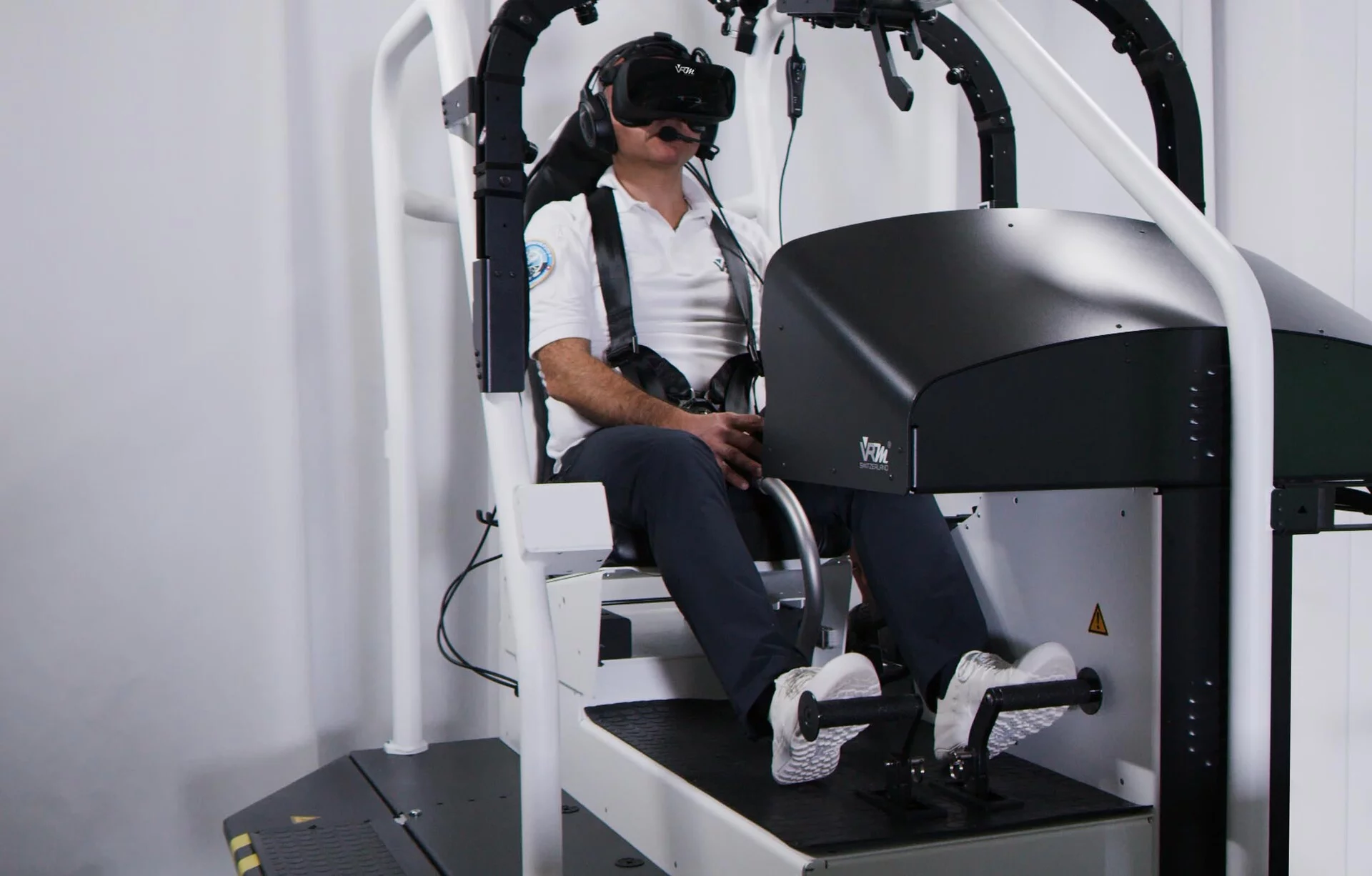
Developed for the H125, the most popular helicopter in the world, Airbus & VRM Switzerland partnered in 2021 to bring the world’s first EASA-qualified virtual reality simulator for training. In 2022, the European manufacturer is partnering again to co-develop a second virtual reality simulator- this time for the light twin-engine H145.
Technology breakthroughs in the future will see virtual reality (VR) applications and devices becoming more powerful and getting better at creating higher-quality visuals. These devices already have a history of use in pilot training, but now VR flying is taking off to the next level.
WHAT’S NEXT?
Virtual (VR) and augmented reality (AR) are revolutionizing the aviation industry as immersive technologies shape the future of aviation and aviation training as we know it.
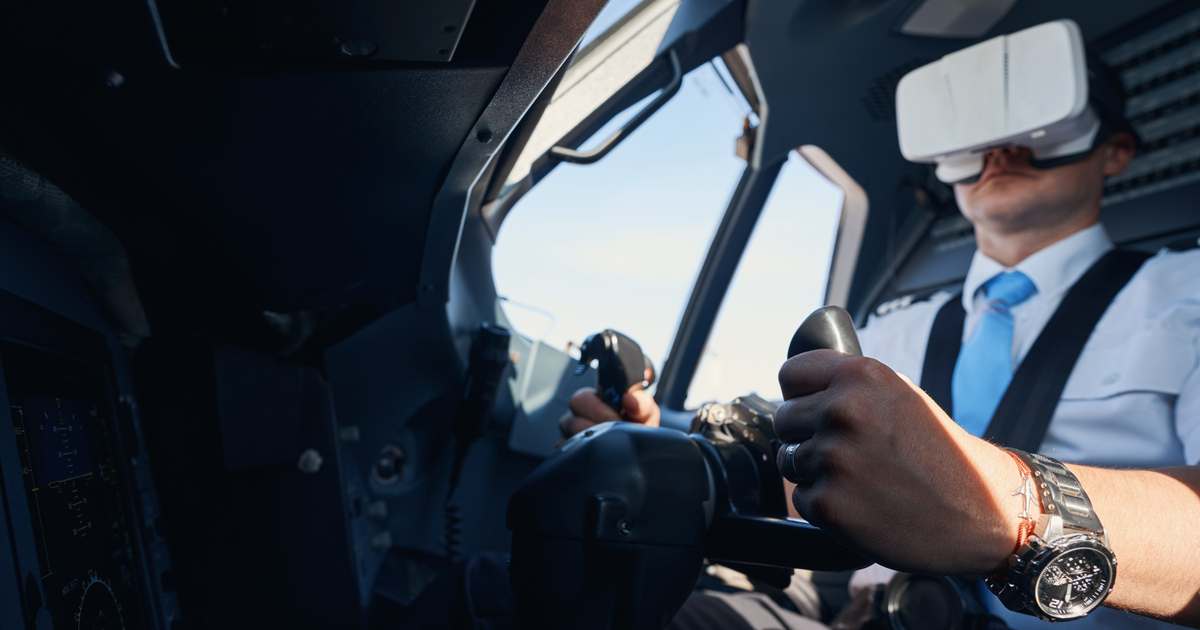
With wide applications in the global aviation market, growth in VR and AR is projected to reach in the billions over the next decade.
Advanced procedure training for pilots is now possible without using a flight simulator or on-site procedure trainer, thanks to the innovative *Airbus Virtual Procedure Trainer (VPT). The software solution immerses trainees within a virtual cockpit and coaches them on Airbus Standard Operating Procedures (SOPs).
With Virtual Reality, the VPT allows trainees to drill procedures repeatedly within a fully interactive cockpit. Trainees can act intuitively on each switch and lever, following the correct sequence whilst building their ‘muscle memory’ and procedural knowledge.
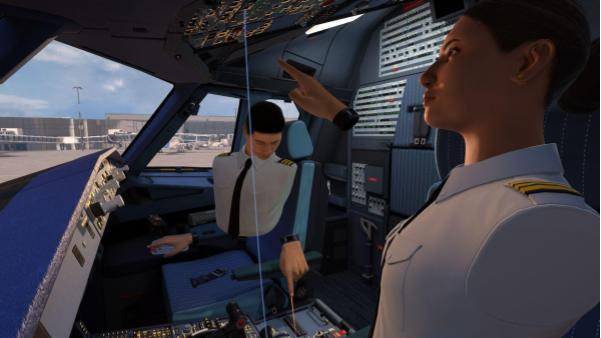
VPT can be purchased stand-alone or with the MATe Suite (Airbus training solution for aircraft systems). It is available on PC-tethered Virtual Reality devices or flat-screen devices such as laptops and iPads.
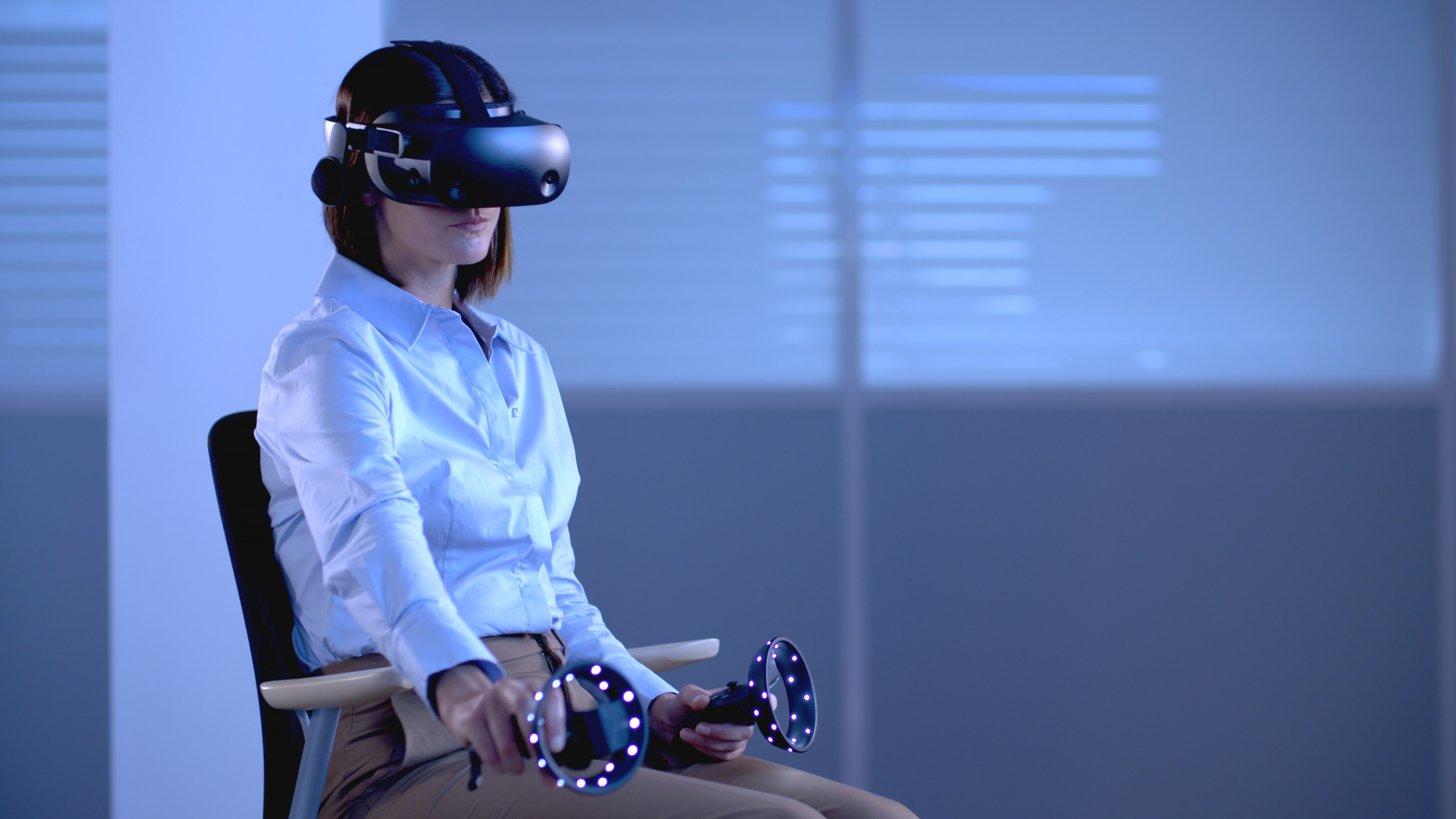
How is virtual reality revolutionising training?
AVIATION IN THE METAVERSE
As the metaverse grows and matures, it has the potential to change how we interact and experience just about everything – including flight training.
The metaverse is “used to describe a combination of the virtual reality (VR) and mixed reality worlds accessed through a browser or headset, which allows people to have real time interactions and experiences across distance.” It is expected to connect humans around the world on an unprecedented scale.
The endless possibilities offered by the metaverse are being explored at a rapid pace, with the advent of electric vertical take-off and landing (eVTOL) aircraft and unmanned aerial equipment such as drones marking the arrival of the next generation of urban air mobility vehicles.
The digital world continues to grow in sophistication with tools such as augmented reality or virtual reality and can now provide a place to experience and enhance real-life experiences such as travel. With this in mind, Airbus is looking to explore outside the box to reinvent air travel by tapping into the infinite range of possibilities and potential of the metaverse.
We live in an era of innovation, and where these emerging trends and technologies can greatly benefit the training of pilots and flight technicians to be prepared and develop the qualities necessary to be excellent professionals performing at their best whilst ensuring flight safety.
And what do you think? How far can virtual reality flight be taken?
